Why Choose Us
Our Factory
REALY has a dedicated development facility having a large pool of experienced scientists who are committed to development of IVD Reagents. Our R & D scientists are engaged in process development, process improvement, formulation and analytical development.
Certificate
CE certificates, ISO 13485 quality system certification, Manufacture License, Marketing Authorization in the country of origin.
Service Regions
Real Tech' s sales network has covered more than 80 countries and areas, providing an exciting opportunity for distribution of quality products at a very competitive price. We are dedicated to making the world a better place by providing people with high quality products and services.
Our History
Each year we participate in medical shows in various countries such as Medlab, Medica and AACC etc. We have got CE certificates, ISO 13485 quality system certification, Manufacture License, Marketing Authorization in the country of origin.
Related Product

Pepsinogen I (PG I) Assay Reagent Kit (CMIA) is a chemiluminescent microparticle immunoassay (CMIA) for the quantitative determination of Pepsinogen I in human serum and plasma.

Neuron-Specific Enolase (NSE) Assay Reagent Kit (CMIA) is a chemiluminescent microparticle immunoassay (CMIA) for the quantitative determination of Neuron specific enolase in human serum and plasma.

CYFRA 21-1 Assay Reagent Kit (CMIA) is a chemiluminescent microparticle immunoassay (CMIA) for the quantitative determination of the content of cytokeratin 19 fragment (CYFRA21-1) in human serum and plasma.

Carbohydrate Antigen 125(CA125)
The Carbohydrate Antigen 125(CA125) Assay Reagent Kit(CMIA) is a chemiluminescent microparticle immunoassay (CMIA) for the quantitative determination of carbohydrate antigen 125 (CA125) in human serum or plasma.

Carbohydrate Antigen 15-3 (CA15-3)
The Carbohydrate Antigen 15-3(CA15-3) Assay Reagent Kit (CMIA) is a chemiluminescent microparticle immunoassay (CMIA) for the quantitative determination of carbohydrate antigen 15-3 (CA15-3) in human serum or plasma.

The Rubella IgM(Rub IgM)assay is a chemiluminescent microparticle immunoassay (CMIA) for the qualitative determination of Rubella IgM antibodies in human serum and plasma.

The Toxoplasma gondii IgM (Toxo IgM) assay is a chemiluminescent microparticle immunoassay (CMIA) for the qualitative determination of Toxoplasma gondii IgM antibodies in human serum and plasma.
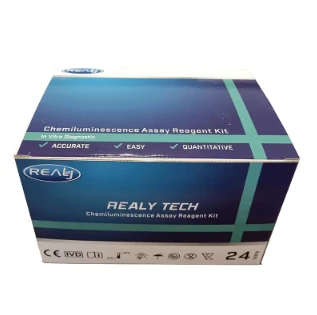
CLIA (Chemiluminescent Immunoassay) is a valuable tool in the diagnosis of cardiovascular diseases. Cardiac markers are proteins found in the blood that can indicate heart muscle damage or stress.

The Alpha-fetoprotein (AFP) Assay Reagent Kit (CMIA) is a chemiluminescent microparticle immunoassay (CMIA) for the quantitative determination of alpha-fetoprotein (AFP) in human serum or plasma.
What is Carcinoembryonic Antigen (CEA)?
Carcinoembryonic antigen (CEA) is a protein made by gastrointestinal cells. It is mostly made during fetal development (in the womb, before birth), and healthy adult levels are very low. CEA level is often increased in colorectal cancer (bowel cancer) and is considered a tumor marker of colon cancer and rectal cancer. CEA is secreted by colorectal adenocarcinoma cells and measured in the blood.
Can Carcinoembryonic Antigen (CEA) Levels Go Down?
The most effective way to lower CEA levels is to address the condition causing its abnormal increase. For example, if the elevated CEA is caused by cancer, surgically removing the malignant tumor allows for CEA to decrease to a normal level. Nonetheless, this could be attained if cancer has not spread to other tissues yet. Otherwise, CEA levels may remain high.
On the other hand, if the high CEA is due to other conditions outside cancer, treating the disorder could also normalize the protein secretion. Additionally, doing the following actions can aid in restoring wellness and help lower CEA levels naturally.
Stress management: Stress has long been associated with tumor growth, increasing CEA levels. On top of the treatment, avoid stress by employing techniques such as mindful breathing, meditation, and other stress-reducing activities.
Quit smoking: Studies have shown that CEA is higher among smokers than non-smokers. This can be due to chronic inflammation of the lung cells that are constantly exposed to tobacco. With that, if you got elevated CEA in your blood test, give up or avoid smoking at all costs.
Regular exercise: In a 2014 clinical trial, exercise was highlighted as a good way to reduce CEA expression. Light to moderate exercise is recommended two to three times a week. It's important to understand that heavy workouts can potentially cancel out the benefits of physical activities, especially among cancer patients.
Increase vitamin D: Maintaining sufficient vitamin D during your treatment can supplement its CEA-lowering mechanism. Spend some time receiving sunlight outdoors, ideally early in the morning. You can also include foods that help synthesize vitamin D in your diet, such as salmon, fortified foods, oranges, and egg yolk. If your doctor suspects vitamin insufficiency, you may be asked to take a vitamin D deficiency blood test.
Eating foods high in omega-3 fatty acids: Similar to vitamin D, omega-3 fatty acids can also help suppress CEA. You can enrich your diet with this essential nutrient by leaning toward foods such as fish (mackerel, sardines, herring, salmon), seafood, and seeds, like chia and flaxseeds.
Elevated CEA caused by cancerous tumors requires proper treatment and guidance from your physician. Before taking the said actionable tips, specifically, those involving supplementation, consult your doctor first.
Expression In Human Tumors Of Carcinoembryonic Antigen (Cea)
Carcinoembryonic antigen (CEA) is a cell surface glycoprotein which is overexpressed in various cancers but reported prevalence data vary considerably for many tumor types. Because of its overexpression in various cancer types and the limited expression in normal tissue CEA has become a potential drug target with several potential drug candidates currently being evaluated. CEA is also shed into the blood stream, so that CEA measurement in the serum is used as a tool for early detection and recurrence monitoring of cancer.
Methods
To comprehensively determine CEA expression in normal and neoplastic tissues, a tissue microarray containing 15,413 samples from 120 different tumor types and subtypes as well as 76 different normal tissue types were analyzed by immunohistochemistry.
Results
CEA was detectable in 65 (54.2%) of 120 tumor categories including 49 (40.8%) tumor types with at least one strongly positive case. CEA positivity was most common in colorectal adenomas (100%) and carcinomas (98.7%), other gastrointestinal adenocarcinomas (61.1%-80.3%), medullary carcinomas of the thyroid (96.3%), pulmonary adenocarcinoma (73.7%), mucinous carcinomas of the ovary (79.8%) and the breast (43.2%), squamous cell carcinomas of various sites (30.2%-69.1%), and small cell carcinomas of the lung (64.3%), the urinary bladder (38.9%), and the prostate (50.0%) as well as non-invasive papillary urothelial carcinoma pTa G3 (33,6%), pTa G2 high-grade (25,0%) and pTa G2 low-grade (5,7%). High CEA expression was linked to high grade tumors (p < 0.0001) and invasive growth (p < 0.0001) in urinary bladder cancer as well as estrogen receptor positivity (p = 0.0005) and HER2 positivity (p = 0,0158) in invasive breast cancer of no special type. In 1.250 colorectal adenocarcinomas, reduced CEA expression was associated with mismatch repair deficiency (p < 0.0001) but not with pT and pN stage. CEA expression level was unrelated to clinico-pathological tumor parameters in adenocarcinomas of the pancreas and the stomach, endometroid endometrium carcinoma as well as in serous and endometroid carcinomas of the ovaries.
Uses/Indications of Carcinoembryonic Antigen (CEA)
To monitor cancer treatment: Monitoring serial CEA levels can help track the effectiveness of treatment. If CEA levels are decreasing, it usually means a tumor is responding to treatment. If levels are increasing, it may mean the tumor is progressing. CEA is often ordered as a baseline test at the beginning of cancer treatment for this reason.
To monitor for recurrence of cancer: If CEA levels were normal and are increasing, it may mean that a tumor has recurred. A major use of the test is to detect relapse after curative treatment for colon cancer.
Cancer staging: Smaller tumors may have lower CEA levels, whereas larger tumors may have higher levels (greater tumor burden).
Understanding the stage of cancer is important in selecting the most appropriate treatments. A 2018 study found that CEA correlated well with the stage (at least stage I to III) of colon cancer.
To see if cancer has spread to certain areas: Spread (metastasis) to some regions of the body may cause much higher elevations of CEA. For example, metastasis to the pleural cavity (with a malignant pleural effusion), peritoneal cavity (within the abdomen), or the central nervous system often leads to very high CEA levels.
To estimate prognosis: Elevated levels of CEA after colon cancer surgery may indicate a poorer prognosis. CEA can also help estimate prognosis with non-small cell lung cancer and breast cancer.
As an adjunct (additional test) in diagnosis: While CEA levels cannot diagnose cancer, they are one puzzle piece that can help establish a diagnosis.
As a screening test for certain people: CEA levels are not considered useful diagnostic tools in the general population, but this test may be ordered to screen for cancer in people with some hereditary colorectal cancer syndromes.
In medical studies: A 2019 review of 19 studies notes that CEA may be a reasonable endpoint (a sign that a treatment is effective) in clinical trials looking for better treatments for metastatic colon cancer. In this meta-analysis, CEA response was strongly linked with overall survival.
Antibodies Of Carcinoembryonic Antigen (Cea)
An anti-CEA antibody is an antibody against CEA. Such antibodies to CEA are commonly used in immunohistochemistry to identify cells expressing the glycoprotein in tissue samples. In adults, CEA is primarily expressed in cells of tumors (some malignant, some benign) but they are particularly associated with the adenocarcinomas, such as those arising in the colon, lung, breast, stomach, or pancreas. It can therefore be used to distinguish between these and other similar cancers.
For example, it can help to distinguish between adenocarcinoma of the lung and mesothelioma, a different type of lung cancer which is not normally CEA positive. Because even monoclonal antibodies to CEA tend to have some degree of cross-reactivity, occasionally giving false positive results, it is commonly employed in combination with other immunohistochemistry tests, such as those for BerEp4, WT1, and calretinin.
For cancers that highly express CEA, targeting CEA through radioimmunotherapy is one of the therapy approaches.Engineered antibodies such as single-chain Fv antibodies (sFvs) or bispecific antibodies have been used for targeting and therapy of CEA expressing tumors both in vitro and in vivo with promising results Regions of high CEA levels in the body can be detected with the monoclonal antibody arcitumomab.
Our Factory
REALY has a dedicated development facility having a large pool of experienced scientists who are committed to development of IVD Reagents. Our R & D scientists are engaged in process development, process improvement, formulation and analytical development. This facility is recognized by State Food and Drug Administration, Government of China. COVID-19 Antigen Rapid Test Kits are our main product, including professional tests and home rapid test.

Certifications


FAQ
Hot Tags: carcinoembryonic antigen (cea), China carcinoembryonic antigen (cea) manufacturers, suppliers, factory, chemiluminescence immunoassay for biomarker assessment, chemiluminescence immunoassay for biomarker combination, chemiluminescence immunoassay for drug exploitation, chemiluminescence immunoassay for biomarker discovery, chemiluminescence immunoassay for biomarker permeability, chemiluminescence immunoassay for biomarker pathway analysis