


Why Choose Us
Our Factory
REALY has a dedicated development facility having a large pool of experienced scientists who are committed to development of IVD Reagents. Our R & D scientists are engaged in process development, process improvement, formulation and analytical development.
Certificate
CE certificates, ISO 13485 quality system certification, Manufacture License, Marketing Authorization in the country of origin.
Service Regions
Real Tech' s sales network has covered more than 80 countries and areas, providing an exciting opportunity for distribution of quality products at a very competitive price. We are dedicated to making the world a better place by providing people with high quality products and services.
Our History
Each year we participate in medical shows in various countries such as Medlab, Medica and AACC etc. We have got CE certificates, ISO 13485 quality system certification, Manufacture License, Marketing Authorization in the country of origin.
Related Product
HIV 1/2/0 Rapid Test Device! Get fast and accurate results within minutes. It's easy to use and requires no special training. Take control of your health and get tested for HIV.

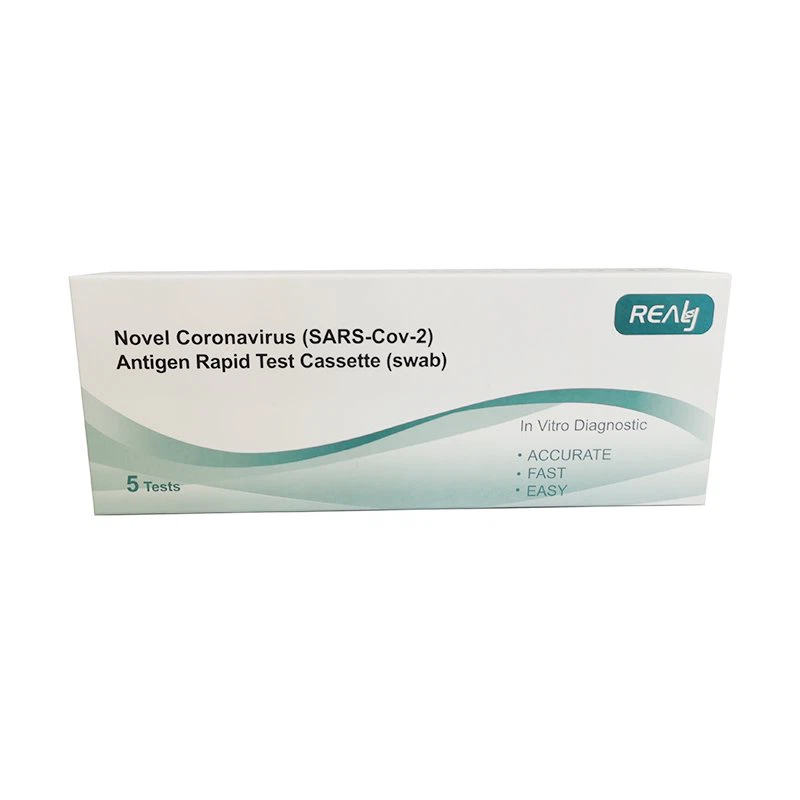
Coronavirus Home Test Kit
Getting results In 10 ~ 15 minutes
Easy and convenient testing process for self-diagnostic test
No need for using extra equipment

SARS-Cov-2 Antigen Test For Home
Getting results quickly
Easy and convenient testing process for self-diagnostic test
No need for using extra equipment

SARS-Cov-2 Antigen Test For Home
Getting results quickly
Easy and convenient testing process for self-diagnostic test
No need for using extra equipment

Coronavirus Home Test Kit
Getting results In 10 ~ 15 minutes
Easy and convenient testing process for self-diagnostic test
No need for using extra equipment

COVID19 Antigen Rapid Test Device
Coronavirus Home Test Kit
Getting results In 10 ~ 15 minutes
Easy and convenient testing process for self-diagnostic test
No need for using extra equipment


COVID-19 Antigen Test For Home Use
Getting results In 10 ~ 15 minutes
Easy and convenient testing process for self-diagnostic test
No need for using extra equipment

COVID-19 Antigen Test For Home Use
Getting results In 10 ~ 15 minutes
Easy and convenient testing process for self-diagnostic test
No need for using extra equipment
What is COVID Test Kit?
A COVID test kit is a medical device used to detect the presence of SARS-CoV-2, the virus that causes COVID-19. These kits are essential for diagnosing infections, monitoring outbreaks, and guiding public health measures.
A Step-By-Step Guide To Doing An At-Home Covid-19 Rapid Antigen Test
Wash your hands thoroughly with warm water and soap for at least 30 seconds.
The kit comes with two tests. Each contains three main items: a collection swab, a test strip and a small vial of liquid. Place them all on a clean surface.
Open the collection swab and insert it into each nostril, rotating five times against the inner wall. You should insert the swab ½ to ¾ of an inch into the nostrils. "A good way to visualize that is it's about the size of the tip of your pinkie finger," Alvarado explained. "Though it doesn't hurt, it does feel really funny." Then put the swab back into its packaging; you'll need it again.
Tap the bottom of the vial of liquid three times on a hard surface.
Open the large cap and insert your swab into the vial, then stir the swab 15 times.
Squeeze the sides of the vial against the swab as you pull it out. "This is a crucial step, because it ensures that you get every last bit of the collection," Alvarado noted. Then put the cap back on the vial.
Open the test strip. "You'll see that it has both a "C" and a "T," Alvarado said.
Open the smaller, top cap on the vial of liquid, then squeeze three drops of your sample into the collection area of the strip.
Set a timer for 15 minutes. Don't disturb the test strip during this time.
Read your test.
Interpretation Of Test Results Of Covid Test Kit
NEGATIVE
A colored band appears on the control line (C line); no colored band shows up on the test line (T line). A negative result indicates there is no coronavirus antigen (N protein) in the specimen, or the level of coronavirus antigen is below the detection limit.
POSITIVE
A colored band appears on the control line (C line), a second colored band shows up on the test line (T line). A positive result indicates the presence of COVID-19 antigen (N protein) in the patient sample.
INVALID
No colored band appears on the control line (C line). An invalid test result suggests there might be insufficient buffer volume or incorrect operating procedures. Carefully review the test procedure and test the same patient again with another coronavirus antigen rapid test cassette. Contact your distributor if the problem persists.
Advantages of COVID Test Kit
Antigen testing is cheap and fast. Knowing that molecular assays cannot continue to carry the burden of all acute COVID-19 testing in the United States, antigen testing offers a solution to the problem of needing tests that can be produced cheaply and run quickly.
Antigen testing may be a useful public health tool. Since antigen tests are generally considered very accurate when they are positive, they may be helpful in quickly identifying highly infectious individuals within a community. However, it is important to note that antigen test performance in areas with low disease prevalence may be poor and data on test performance in asymptomatic individuals are limited. Since antigen tests are more likely to be positive when a person has a higher viral load, super-spreader events or outbreaks may be prevented by identifying these individuals early and isolating them.
Potential for use in the point-of-care setting. The rapid nature of antigen assays, as well as less reliance on expensive equipment and reagents, make them good candidates for point-of-care testing. This may reduce the burden of testing on laboratories and provide rapid results at the location where the patient is tested. It is important to note that point-of-care testing sites must have a CLIA certificate in order to run these tests, so the locations where they can be offered will vary.
Covid-19 Antigen Rapid Test Principle
The coronavirus antigen rapid test kit is a lateral flow assay that qualitatively detects the presence of nucleocapsid (N) protein in upper respiratory samples (nasal swabs). This lateral flow assay is designed with the sandwich immunoassay format. When the specimen is added onto the sample pad of a test cassette, coronavirus N protein binds with colloidal gold-labeled SARS-CoV-2 N protein antibody to form an antibody-antigen (Ab-Ag) complex.
The Ab-Ag complex is captured by SARS-CoV-2 N protein antibody (Rabbit monoclonal antibody) when migrating to the test line under capillary action. A red-colored band will appear on the test line, which indicates the specimen is COVID-19 nucleocapsid protein positive. No color band will appear on the test line if the specimen does not contain any coronavirus antigen (N protein), or the antigen level is below detection limit.
The conjugation pad also contains colloidal gold-labeled chicken IgY, which is captured by Goat anti-chicken IgY on the control line as procedural control. A colored band on the control line represents the proper liquid flow through the cassette; the absence of a colored band on the control line indicates insufficient sample or buffer volume.
Types of COVID Test Kit
Rapid, point-of-care diagnostic tests
These tests, which can be classified as either antigen or molecular tests, rely on a mucus sample obtained from the throat or nose and is analyzed at a clinic or physician's office. Results from these tests can often be available within minutes of analysis.
At-home collection tests
Tests performed at home are only available by a doctor's prescription. These tests allow the patient to self-collect a sample in their home and send it to a lab for analysis.
Saliva tests
These tests rely on samples from patients who spit into a tube versus getting their throat or nose swabbed. For some people, saliva tests may be more comfortable and also safer, especially for frontline healthcare workers.

The Role Of Antigen Testing In Covid-19
The use of diagnostic assays to detect COVID-19 in the United States has been immensely challenging for various reasons including supply chain shortages, funding and staffing challenges and overburdening of the healthcare system. It is important to understand that different SARS-CoV-2 test methodologies serve unique purposes in this pandemic, and there is not a one-size-fits-all solution to the crisis. While PCR assays are highly sensitive and excellent for diagnosing acute infection, they are expensive and require the use of special reagents, equipment and specially trained clinical laboratory scientists, all of which have been stretched thin during the pandemic so far. Serology testing is useful for determining if someone had a previous SARS-CoV-2 infection, but since it takes 1-2 weeks for antibodies to develop, it is not recommended for the diagnosis of acute disease.
Antigen tests are cheaper to produce than PCR tests and can be performed very quickly, making them an option worth considering as a screening tool. Once additional reliable antigen assays enter the market, it may be possible to scale antigen testing up to millions of tests a day in the United States, which could help ease the testing burden in some locations. While molecular tests can be performed in real time, supply chain and throughput challenges have made this unrealistic during the COVID-19 pandemic. Implementing antigen testing in the COVID-19 testing algorithm could reduce strain on laboratories and reserve molecular testing for situations where high test sensitivity is required.
Our Factory
REALY has a dedicated development facility having a large pool of experienced scientists who are committed to development of IVD Reagents. Our R & D scientists are engaged in process development, process improvement, formulation and analytical development. This facility is recognized by State Food and Drug Administration, Government of China. COVID-19 Antigen Rapid Test Kits are our main product, including professional tests and home rapid test.

Certifications


FAQ
Hot Tags: covid test kit, China covid test kit manufacturers, suppliers, factory, home test to detect changes, cov antigen test, home health test, compare home test products, easy to use test kit, antigen rapid test


